


We are so glad you’re here.
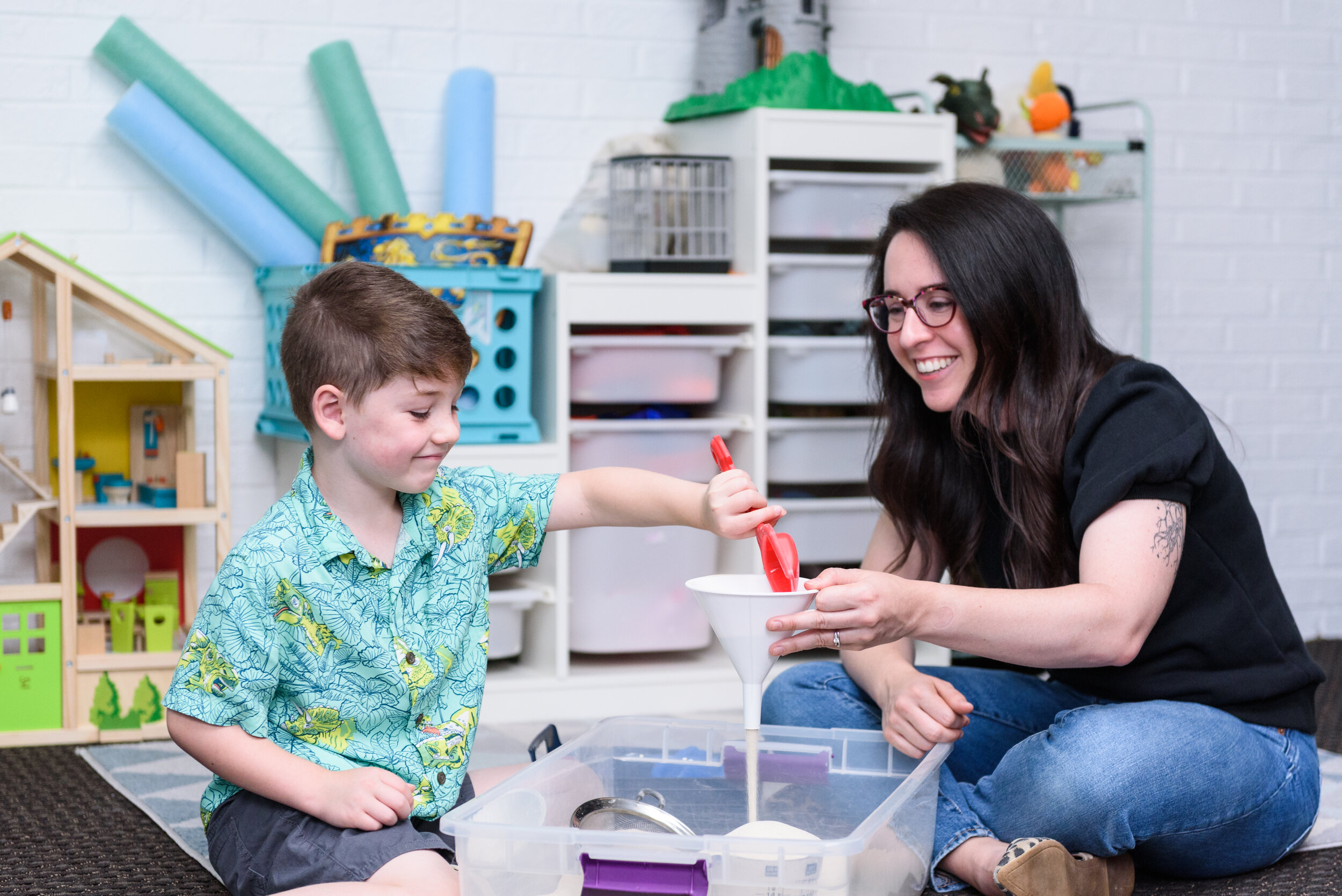
You’ve probably ended up on this page because you’re wondering who we are and if we’ll be a good fit for you and your child. We are so honored that you’ve considered us as someone who may be able to help.
We are passionate about providing relationally-focused, play therapy and other creative counseling approaches to children ages 3+ who are struggling with big feelings and big behaviors.
We work with children who have faced and overcome challenges, including trauma, grief and loss, attachment and relationship concerns, oppositional behaviors, emotional regulation challenges, depression, anxiety, and adjustment issues.
Our team also specializes in providing neurodiversity affirming care (read what this means to us), and we explore disability through the social model of disability so we can support and celebrate differences instead of treating or "fixing" them.
Check out the Meet the Team page to learn more about each individual therapist and the varied experiences, backgrounds, and approaches they bring to the team.
We can’t wait to meet you.
What is Play Therapy?
Imagine trying to explain to someone how upset you are, but you don’t have access to the language to talk about it - how would you share your experience? Play therapy is to kids like talk therapy is to adults - toys are like the child's words and play is the child's language.
Children are still developing their verbal skills, so it makes sense for them to explore their worlds in ways beyond just words.
Through various types of play, your child can explore past experiences and envision a brighter future.
Play therapy helps children build and strengthen-problem solving skills to work through their struggles through age and developmentally appropriate ways.
Guided by our highly-trained therapists, play therapy is an evidenced based approach that helps children build confidence, healthy coping skills, and a strong sense of self.
We could talk to you about the power of play for days. But since you might not want to know that much just yet, here’s a bit to get you started:
“Therapists strategically utilize play therapy to help children express what is troubling them when they do not have the verbal language to express their thoughts and feelings (Gil, 1991). Through play, therapists may help children learn more adaptive behaviors when there are emotional or social skills deficits (Pedro-Carroll & Reddy, 2005).
The positive relationship that develops between therapist and child during play therapy sessions can provide a corrective emotional experience necessary for healing (Moustakas, 1997). Play therapy may also be used to promote cognitive development and provide insight about and resolution of inner conflicts or dysfunctional thinking in the child (O'Connor & Schaefer, 1983; Reddy, Files-Hall, & Schaefer, 2005).”
- a4pt.org
Becoming a Registered Play Therapist (RPT™) requires a minimum of 150 hours of specialized education, plus specific supervision and in the field experience utilizing play - all of which goes above and beyond what’s required for a therapist’s basic licensure! Therapists who obtain or who are pursuing this credential are highly qualified and dedicated to changing the lives of others (and themselves) through play.
Combined, our team has over 2000 hours in Play Therapy training!
Child Therapy Services
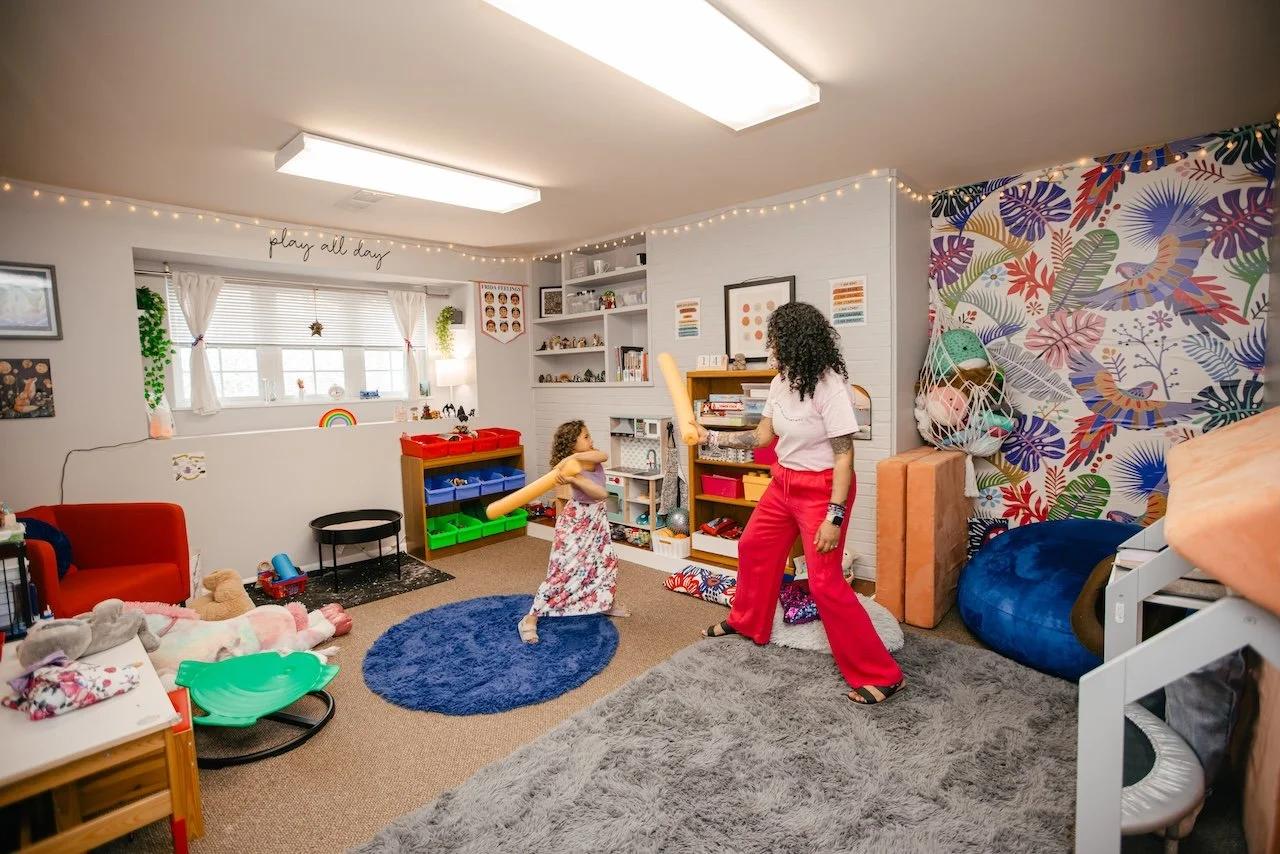
Individual Play Therapy
-
Play Therapy is to kids what counseling or talk therapy is to adults. Children use play as their natural language and the toys are their words.
An evidenced-based approach, play therapy helps children feel empowered to explore their feelings, behaviors, and challenges in ways that are naturally engaging and developmentally appropriate. Through play therapy, children can change the way they think about, feel toward, and resolve their concerns.
Our therapists utilize a mix of directive and non-directive play therapy interventions, always keeping the relationship at the center of whatever activity.
By following the science of the brain, relationships, and growth, our therapists place a high value on the role that regulation, attentive presence, and authenticity play in fostering meaningful connection and growth.
-
At Wired, we offer play therapy to children ages 5 to 14. We individualize treatment based on the needs, interests, and goals of each child.
We work with children who have faced and overcome challenges, including trauma, grief and loss, attachment and relationship concerns, oppositional behaviors, anger management, ADHD, depression, anxiety, and adjustment issues.
For older kids and teens, your counselor will use activities, games, arts, crafts, and sand tray therapy to provide a non threatening means of communication.
-
• Build regulation skills
• Grow self-esteem and self-worth
• Develop problem solving skills
• Learn new ways to communicate
• Develop respect and acceptance of self and others
• Stimulate creative thinking and exploration
• Express emotion and relieve stress
• Cultivate empathy for self and others
• Enhance social skills
• Process trauma
-
The counselors at Wired each bring their own unique training and skills to their work. You can visit the Meet the Team page to learn more about each counselor.
Our counselors have training in Play Therapy models including: Synergetic Play Therapy, Child-Centered Play Therapy, AutPlay, Theraplay®, and more.
Becoming a Registered Play Therapist (RPT™) requires a minimum of 150 hours of specialized education, plus specific supervision and in the field experience utilizing play - all of which goes above and beyond what’s required for a therapist’s basic licensure! Therapists who obtain or who are pursuing this credential are highly qualified and dedicated to changing the lives of others (and themselves) through play.
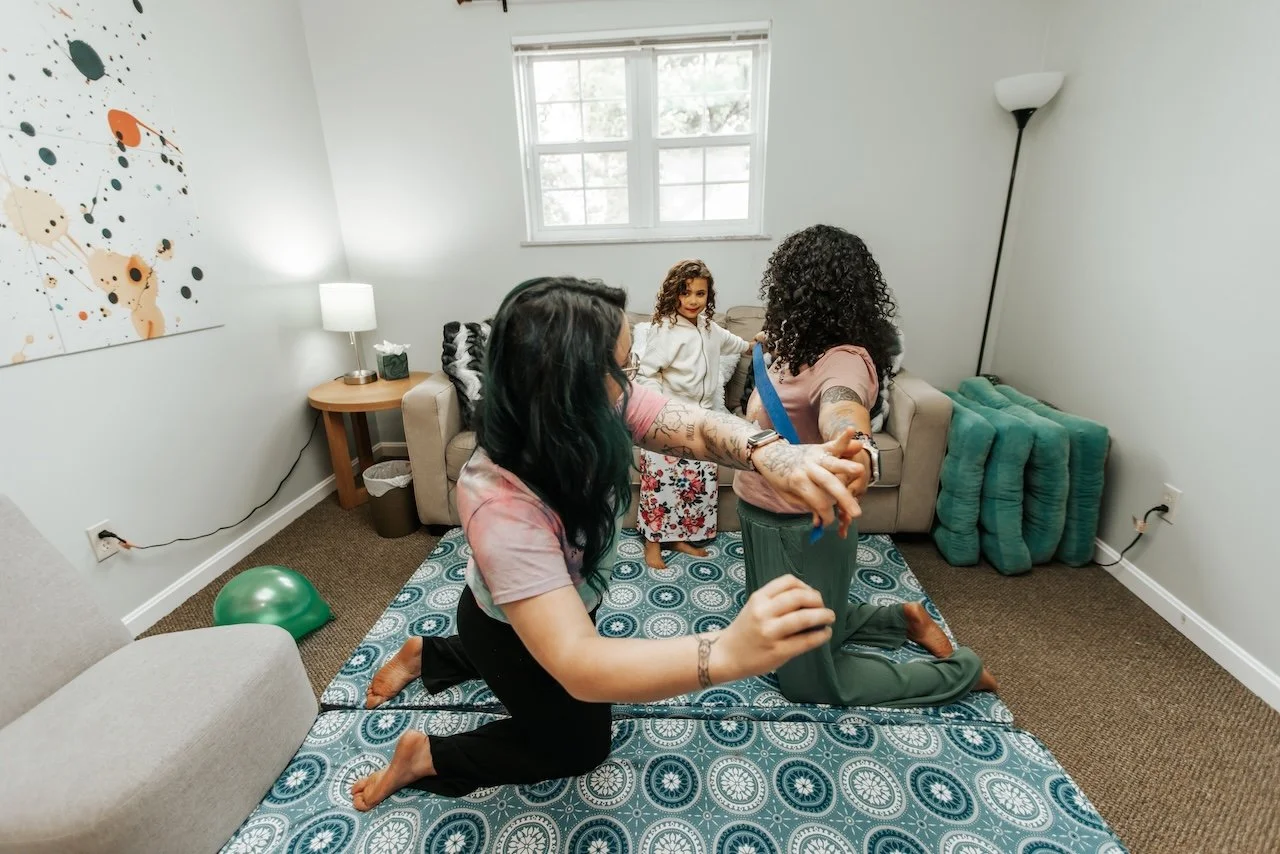
Theraplay®
-
Theraplay® is an evidence-based dyadic child and family therapy for building and enhancing attachment, self- esteem, trust in others, & joyful engagement. It is based on the natural patterns of playful, healthy interaction between parent & child and is personal, physical, and fun.
Strong attachment between the child and the important adults in their life has long been believed to be the basis of lifelong good mental health as well as the mainstay of resilience in the face of adversity. Modern brain research and the field of neuroscience have shown that attachment is the way in which children come to understand, trust and thrive in their world.
-
Theraplay® can empower caregivers by learning to play with their child in a way that establishes felt safety, increases social engagement, expands arousal regulation, and supports the development of positive self-esteem for both the child and the caregiver.
Children who are withdrawn, passive, or depressed, children who are overactive, anxious, or oppositional, and those who are afraid of relating or attaching because of adoption, losses, or trauma can be helped by Theraplay®.
Theraplay® works with children as young as 2 all the way through age 17.
-
In treatment, your counselor guides the caregiver and child through playful, fun games, developmentally challenging activities, and tender, nurturing activities. The very act of engaging each other in this way helps the caregiver regulate the child's behavior and communicate love, joy, and safety to the child. It helps the child feel secure, cared for, connected and worthy.
-
Theraplay sessions usually last up to 30 to 45 minutes, depending on the child’s age and development. The total number of sessions is 24, depending on the resources available.
Theraplay® begins with a MIM, the Marschak Interaction Method, which is a play-based, caregiver-child assessment that looks at the interactions between child and caregiver. This is NOT a parenting assessment - it simply provides information to help your counselor understand attachment dynamics and to guide treatment.
After the MIM, caregivers meet with the counselor to process and treatment plan. From there, you’ll begin sessions with your child!
-
Claire Goodrum, Candy Ulitzsch, and Machen Champion are all trained to offer this service to families.

Telehealth
-
Telehealth counseling is a great option for flexibility with scheduling and accessibility. Our counselors work hard to create a welcoming, playful space for children and teen who engage in virtual counseling.
Telehealth would be great for children ages 8 - 14 who are facing a wide variety of concerns.
-
Your counselor will send a HIPAA-compliant, secure video link prior to the scheduled session. Sometimes your counselor may have you prepare some things, like paper and crayons, so your child is ready to engage in an activity.
It’s best to find a quiet, private space to meet, like a bedroom or office. Having a counseling session in the car or out and about makes it hard to talk openly about tough subjects.

EMDR for Kids & Teens
-
When we experience trauma, our brain may processes and stores memories incorrectly. This incorrect storage can lead to past memories influencing our feelings and behaviors in the present. Related or unrelated stimuli in the present can lead someone to react as they did at the time of the initial trauma because the brain feels as if the past disturbing event is currently underway.
EMDR therapy helps address this inaccurate storage issue so that the painful memories associated with past trauma lose their emotional charge. Once this happens, clients can react to stimuli in the present without the past interfering.
EMDR is shown to be effective to treat other concerns, such as anxiety, depression, phobias, and more.
-
Children, and even teens, may find it difficult to fully engage with some types of talk therapy, so EMDR can be an effective alternative because it does not require verbal processing to be effective. Sessions will be adapted depending upon the specific needs and developmental stage of your child or teen.
At Wired, our EMDR trained counselors incorporate play-based activities to facilitate the EMDR process - so rather than just watching a light bar, children may move their bodies back and forth while running or moving their hands in the sandtray. Children learn through experimenting and hands-on experiences. Pairing EMDR and play therapy not only encourages creativity and engagement, but also provides children with control over their environment that they may otherwise not have.
-
Here’s a great explanation from expert therapist, Ana Gomez:
Before we talk about what EMDR is let me tell you about what EMDR does. When we have yucky things that happen to us, we have many mixed-up feelings and many mixed-up thoughts. We do not feel good in our minds, bodies, and hearts. It is like carrying bags of mixed-up stuff. When we are so busy carrying all these bags, we do not have space in our hearts, minds, and bodies for the good feelings and thoughts. EMDR can help kids by making those bags smaller or even get rid of them so kids will have space for the good feelings and the good thoughts. Grown- ups have a rather complicated name for EMDR: Eye Movement Desensitization and Reprocessing.
-
At the end of every EMDR session, your counselor will spend time intentionally helping your child or teen to regulate themselves so that they can move out of session more easily.
It is possible that there will be big feelings, fatigue, or general grumpiness may occur for 24 - 48 hours after a session - this is normal! In fact in means their brain is doing what it needs to heal.
Your counselor will meet with you (the caregiver) to think through all of this prior to starting EMDR.
-
EMDR sessions often run longer than traditional sessions, which allow the client time to process and re-regulate before leaving. There are additional materials utilized in EMDR sessions as well.

Caregiver Consultation & Support
-
You are a key part of the therapy process!
You can think of us as translators; we speak your child’s language and this allows us to act as safe, trustworthy, and regulated translators between every child and caregiver.
Our hope is that we’ll build a relationship where you feel safe to explore the challenges of caregiving so that you can learn new ways to support your child’s unique needs.
-
The counselors at Wired to Bloom will typically schedule monthly caregiver-only check ins to provide updates about the progress of treatment goals, exchange information, and offer professional feedback. Regular check-ins are built into the individual therapy costs.
-
If more support is needed, caregivers can schedule consultation sessions with their counselor for support and professional feedback. These would be considered full sessions, outside the regular check-ins.
During these sessions, you’ll discuss a variety of topics to help enhance the caregiver-child relationship and increase cooperation and well-being. Topics may include things such as child and brain development, nervous system regulation, sensory supports, co-regulation, and more.

“Children are capable of positive self-direction… Children are flowers to bloom, not clay to be shaped.”
Dee Ray
The Heart of Our Work
Each of the therapists at Wired to Bloom firmly believes that all children (and adults) are capable of positive growth and change. In fact, this drive towards self-organization and connection is a biological imperative in all of us - we’re all wired to bloom, hence the name! Healing is possible for all of us, even for those who have experienced the most profound challenges and difficulties.
In play therapy, children feel empowered to explore their feelings, behaviors, and challenges in ways that are naturally engaging. Our therapists utilize a mix of directive and non-directive play therapy interventions, always keeping the relationship at the center of whatever activity.
By following the science of the brain, relationships, and growth, our therapists place a high value on the role that regulation, attentive presence, and authenticity play in fostering meaningful connection and growth.
We love this outline of “What Therapy Really Is” by Robyn Gobbel.